
Views: 0 Author: Site Editor Publish Time: 2026-03-02 Origin: Site


Installing storage after tile is finished often creates more work and worse results. A well-plactical shower niche looks cleaner and works better from the start. In this article, you will learn how to frame a shower niche for a custom opening or a preformed insert, choose the right location, and prepare it for the next installation steps.
Before any framing begins, the most important decision is not the niche style but the opening itself. A well-placed opening makes installation easier, supports waterproofing, and gives the finished niche a balanced look once tile is installed. A poorly chosen opening, by contrast, can force awkward framing adjustments, reduce usable storage, or create tile cuts that look accidental rather than intentional. That is why the opening should be planned around the wall conditions, the items the niche needs to hold, and the tile layout that will surround it.
Not every wall cavity is equally practical for a recessed niche. Interior walls are often easier to work with because they are less likely to involve insulation conflicts or other constraints that limit usable depth. Some cavities may also be interrupted by plumbing, vent lines, wiring, or framing members that reduce the clear space available for a niche box. Before marking the cut area, the opening needs to be treated like a real construction decision, not just a visual one.
A good starting point is to inspect the wall cavity and verify three things: clear width between studs, usable depth inside the wall, and the absence of obstacles in the exact placement zone. If the wall cannot provide a clean recessed area without major structural or mechanical interference, it is usually better to shift the location early than force the niche into a problematic spot.
What to Check Before Marking the Opening | Why It Matters |
Clear stud spacing | Determines whether the niche fits a standard bay or needs framing changes |
Usable wall depth | Affects whether bottles will sit comfortably inside the niche |
Plumbing or wiring nearby | Prevents cutting into systems that may need relocation |
Wall type | Helps identify whether the cavity is practical for a recessed installation |
Reach height in the shower | Ensures the niche will be comfortable to use every day |
The opening should be sized for how the niche will actually function in daily use. That means planning for tall shampoo bottles, pumps, razors, soap, or shared storage rather than choosing dimensions only because they look symmetrical on the wall. A niche that is too short can make taller bottles awkward to fit, while one that is too shallow may look clean on paper but feel frustrating once used.
When deciding dimensions, focus on these priorities:
● bottle height clearance
● comfortable shelf depth
● enough width for the number of products stored
● proportions that still look balanced within the shower wall
This approach leads to a niche opening that feels intentional and usable instead of decorative but impractical.
Tile layout should shape the final rough opening before any cuts are made. The niche may be structurally possible in several positions, but not every position will work visually once grout joints and tile courses are added. If the opening lands in a way that creates thin tile strips or uneven borders, the finished result can look off even if the framing itself is correct.
Planning the rough opening with the tile pattern in mind helps control edge alignment, surrounding cuts, and visual proportion. In practice, this means adjusting the opening slightly before framing so the niche relates cleanly to the full wall layout rather than being forced into it later.
Framing is the stage where a shower niche either becomes a clean, reliable recessed feature or turns into a problem that shows up later during backer board, waterproofing, and tile installation. The goal is not only to create an opening in the wall, but to create one that stays rigid, holds its shape, and supports the next layers without forcing corrections. When the niche fits within an existing stud bay, the work is relatively straightforward. When it extends beyond that space, the framing has to be treated more carefully so the wall is not casually weakened.
The simplest way to frame a shower niche is to place it between two existing studs and build the opening with horizontal blocking. This method works well when the desired width fits within the available stud spacing, which avoids unnecessary structural changes. Instead of cutting out vertical framing, the installer defines the niche by adding one horizontal block at the bottom and another at the top, creating the rough opening height while the existing studs form the sides.
This approach is popular because it reduces complexity and makes the opening easier to keep aligned. Once the planned height has been confirmed, both blocks can be cut to fit tightly between the studs and fastened securely. The bottom block establishes the lower limit of the niche, while the upper block locks in the height and gives the opening a clear top edge. If the niche will include an internal divider or shelf, that support should also be planned at this stage so the framing logic remains consistent.
Framing Situation | What Changes in the Wall | Main Framing Goal |
Niche fits between two studs | Add top and bottom blocking only | Create a stable rough opening with minimal wall disruption |
Niche wider than one stud bay | Modify framing beyond a single cavity | Reinforce the opening so strength is not lost |
Double or tiered niche layout | Add intermediate support points | Keep the box rigid and support the final configuration |
Bottom of niche needs drainage | Adjust base rather than leaving it flat | Prepare for water runoff before finish layers are installed |
A wider shower niche changes the job because the opening can no longer rely on one standard cavity. At that point, it is no longer enough to insert a few blocks and call the framing complete. The wall has to be reworked so the larger opening is still properly supported, especially if a stud must be interrupted to create the desired width. This is where many DIY mistakes begin, because cutting a stud without reinforcement may look acceptable at first but can create weakness that should have been addressed from the beginning.
The safer mindset is to treat a widened niche opening more like a framed wall opening than a casual notch in the structure. That means the opening should be intentionally supported rather than improvised. In practice, the framing must transfer loads around the niche area instead of leaving the surrounding wall to absorb the change randomly. If there is any uncertainty about whether the wall is load-bearing or whether structural members can be altered, that decision should be resolved before cutting starts.
Key checks before widening the opening:
● confirm whether the wall is structural or non-structural
● verify how much clear width is truly needed
● plan reinforcement before removing any stud material
● avoid assuming that symmetry is worth extra framing risk
Even when measurements are correct on paper, the framed opening still needs to be checked in place. A niche box that is slightly out of square may not seem serious during rough framing, but the error becomes more obvious once board edges, finished corners, and tile lines are introduced. That is why the opening should be checked for squareness, consistent side-to-side width, and solid fastening points before the project moves on.
The opening should feel rigid, not flexible. If any side can shift, twist, or bow, the problem will travel forward into every later step. Fastening points should also be placed where the niche assembly or backer board can be attached securely without relying on weak edges or unsupported spans. Precision here is less about perfection for its own sake and more about preventing visible installation problems later, such as uneven reveals, difficult board fitting, or a niche insert that does not sit cleanly in the framed cavity.
The bottom of a shower niche cannot remain perfectly flat because it will be part of a wet area. If the base is left level, water can sit on the finished shelf instead of draining outward, increasing the chance of moisture problems over time. That is why drainage should be built into the setup of the opening itself rather than treated as a cosmetic correction later.
A slight forward pitch is usually enough to direct water back toward the shower. This can be created by planning the base so the finished bottom will not sit dead level once board, waterproofing, and tile are added. Thinking about slope during framing keeps the niche build logical from the start, because the bottom is already working with the wet environment rather than against it.
Once the niche framing is complete, the opening still is not ready for waterproofing or tile. At this stage, the goal is to convert a rough framed cavity into a clean, durable recessed box with controlled edges and a stable surface. This is where backer board matters: it defines the niche interior, creates the visible geometry of the opening, and provides the base that later layers depend on. If the board is cut carelessly or installed without consistency, the finished niche can look uneven even if the framing underneath was accurate.
Backer board turns the framed opening into a true shower niche by covering the back, sides, top, and bottom of the cavity. Once these panels are installed, the niche stops reading like exposed framing and starts functioning like a recessed box with a measurable interior depth. Each piece should be cut to fit its location closely so the opening stays crisp and the transitions from one plane to another remain controlled.
The order of installation matters because it affects how cleanly the edges meet. The back panel establishes the depth, while the side, top, and bottom pieces define the visible perimeter of the niche. The objective is not simply to cover wood, but to create a uniform interior where all surfaces sit firmly and align with the surrounding wall assembly. Any inconsistency here can complicate trim details, create uneven tile buildup, or leave the niche looking slightly twisted once finished.
Backer Board Area | Installation Priority |
Back panel | Sets the interior depth and establishes the rear plane |
Side pieces | Define the width and help keep the opening visually square |
Top panel | Creates a clean upper transition for the niche opening |
Bottom panel | Forms the base of the recessed box and follows the planned pitch |
Perimeter edges | Must stay neat so surrounding wall board meets the niche cleanly |
After the board is installed, the niche still has weak points wherever panels meet or fasteners interrupt the surface. These joints, inside corners, and screw penetrations are part of the transition from rough construction to a stable substrate. Until they are treated properly, the niche remains incomplete because the assembly is not yet unified into one continuous surface.
This step is important for both durability and finish quality. Open seams can telegraph movement, leave irregular gaps, or create vulnerable spots before waterproofing even begins. Screw heads also need attention so they do not interrupt the surface plane or interfere with later coatings. The goal is to leave the niche solid, even, and continuous, with corners that feel intentional rather than pieced together. A niche that reaches this stage cleanly is far easier to waterproof and much more predictable when tile work starts.
Many shower niche problems begin long before tile is installed. The framing stage sets the size, shape, and support of the opening, so small decisions here often become visible flaws later. A niche may seem centered and visually balanced during layout, yet still fail in daily use if it cannot comfortably hold bottles, sheds water poorly, or creates awkward transitions for backer board and waterproofing. That is why common mistakes are less about appearance alone and more about choosing an opening that performs badly once the shower is in service.
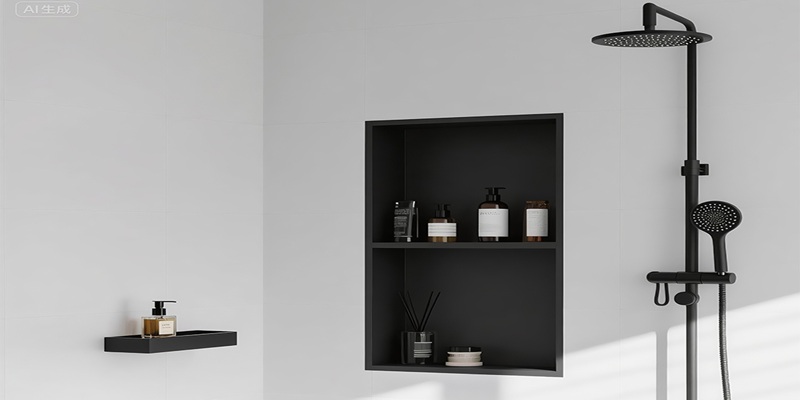
One of the most common mistakes is framing a niche around appearance without checking how it will actually function. A niche can look well placed on the wall but still be too shallow for larger bottles, too narrow for shared storage, or set at an inconvenient height for everyday reach. These problems become even more noticeable after the shower is finished, when adjustments are no longer simple. The same issue can also affect the installation of a recessed shower niche insert, because an opening that is off in depth, width, or alignment may not accept the unit cleanly.
Another mistake is assuming waterproofing will fix whatever the framing leaves behind. In reality, the shape of the opening directly affects how easily the niche can be sealed. Crooked corners, unsupported edges, uneven depths, and badly planned transitions all make waterproofing harder and less predictable. A niche that is difficult to seal usually did not become a problem during membrane application; it was framed in a way that created unnecessary weak points from the start.
Framing Mistake | Later Problem It Creates |
Opening too shallow or narrow | Poor storage function and difficult product fit |
Uneven or out-of-square framing | Awkward board installation and visible finish issues |
Flat niche base | Water sits instead of draining outward |
Overcomplicated opening shape | Harder waterproofing and more vulnerable corners |
Improper stud modification | Loss of wall strength and framing instability |
The most serious errors happen when framing is altered without understanding what the wall is doing. Widening a niche opening is not the same as adding simple blocking between studs. If a stud is cut or weakened casually, the wall may lose support that should have been redirected properly. That risk is especially important when the wall may be load-bearing or when the installer assumes all stud bays can be modified the same way.
Learning how to frame a shower niche means choosing the right opening, framing it accurately, and preparing it for waterproofing and tile. A good niche should be practical, strong, and easy to finish. This same approach also supports clean installation of modern recessed storage products from GuangDong Fiesono Tech Co.,LTD., which offer durable, space-saving value for bathroom projects.
A: An interior wall is usually best because a shower niche needs clear depth and fewer obstructions.
A: A shower niche can fit one stud bay easily; wider openings usually need reinforced framing.
A: Yes, a shower niche should slope slightly forward to help water drain instead of pooling.
A: No, a shower niche should be framed after tile planning to avoid awkward cuts and poor alignment.


