
Views: 0 Author: Site Editor Publish Time: 2026-03-10 Origin: Site


Planning a bathroom upgrade often starts with one small question: should your shower niche be vertical or horizontal? The answer affects storage, style, and daily comfort. In this article, you will learn how to choose the right layout based on shower size, product storage, installation limits, and the look you want.
Choosing between a vertical and horizontal shower niche changes far more than the shape of a cutout in the wall. It affects how much storage you gain, how easily the niche fits into the framing, and how the shower feels once everything is tiled. In practical terms, this is a space-planning decision first. A niche that looks stylish on a design board can still feel awkward if it does not match the width of the wall, the number of products being stored, or the proportions of the shower itself. That is why the most useful starting point is not trend preference, but how the available wall space can work hardest.
A vertical layout is often the smarter choice when the shower wall is narrow but still has enough usable height. Instead of stretching across the wall, the niche rises upward within a tighter footprint, which makes it especially helpful in compact showers or layouts where horizontal room is limited. Because the opening stays relatively narrow, a vertical niche can often provide generous storage without visually taking over the wall. It also gives more flexibility for separating items by level, which is useful when tall shampoo bottles, soap, razors, and smaller products all need dedicated space.
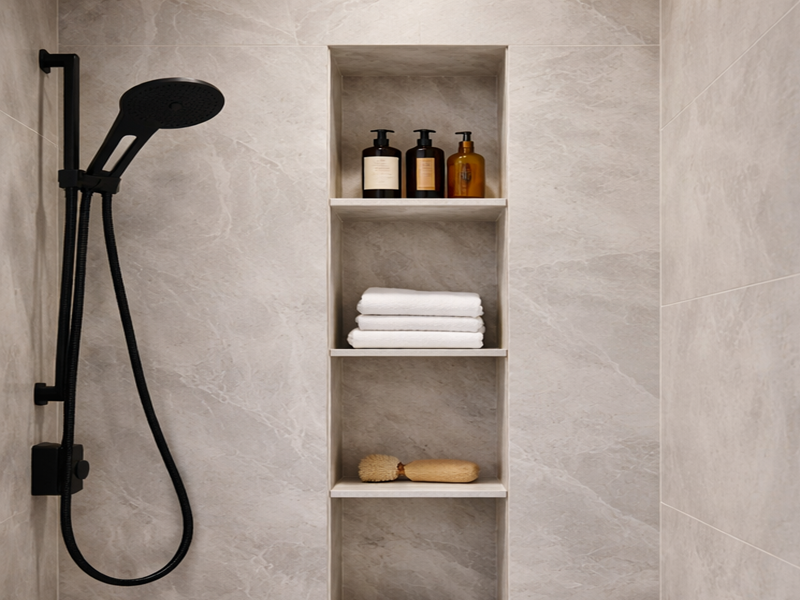
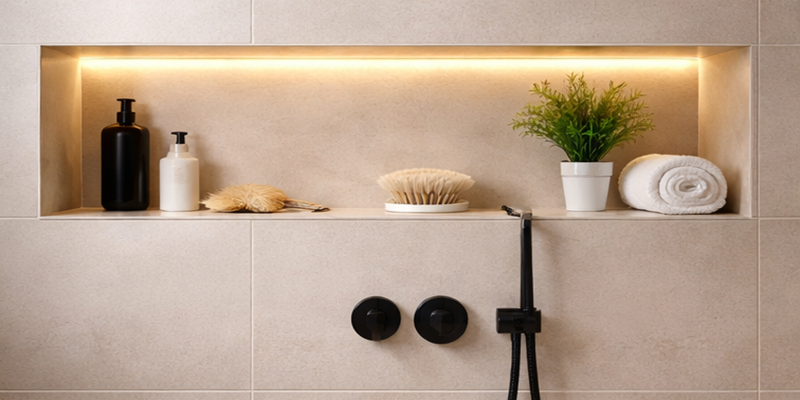
A horizontal niche becomes more effective when the shower wall has enough uninterrupted width to support a longer opening. In a wider shower, that extra span can create a broad storage zone that feels balanced rather than crowded. Instead of stacking items, the layout lets products sit side by side on one long ledge, which can make everyday access faster and more intuitive. This format also tends to suit larger walk-in showers and tub-shower combinations where the wall already has a stronger horizontal presence. In those settings, the niche can read as part storage feature and part design statement.
Orientation | Best spatial advantage | Storage behavior | Best fit for |
Vertical shower niche | Uses wall height efficiently | Supports separated levels and shelf-based organization | Narrow showers, limited wall width, compact layouts |
Horizontal shower niche | Uses wall width efficiently | Creates one broad storage run with side-by-side access | Wider showers, longer walls, more open layouts |
The better option depends on what the shower can realistically support. A vertical niche answers the problem of limited width, while a horizontal niche answers the opportunity created by extra wall length. Neither one is automatically superior. The right choice comes from matching niche direction to wall proportions, storage habits, and layout constraints rather than assuming one shape is more modern or universally practical. In other words, the best shower niche is the one that fits the space so naturally that it feels planned from the start, not added afterward.
The best shower niche for daily use is the one that matches what actually needs to be stored inside it. That sounds obvious, but it is where many design decisions go wrong. A niche may look elegant in photos and still fail in real life if tall pump bottles do not fit comfortably, small items slide around without separation, or multiple users end up stacking products in the same cramped area. Storage needs are rarely uniform. Shampoo, conditioner, body wash, bar soap, razors, and smaller grooming items all take up space differently, so the shape of the niche directly affects how usable that storage feels once the shower is in everyday rotation.
Different product types naturally favor different layouts. A vertical niche is often better when storage needs vary by height, because it allows the interior to be divided into levels. That makes it easier to reserve taller sections for large bottles while keeping smaller items on their own shelf instead of letting everything collect on one surface. In a household that uses a mix of pump bottles, soaps, razors, and specialty products, that built-in separation can make the niche feel more organized and less cluttered. A horizontal niche works differently. Rather than dividing storage upward, it spreads products across a longer ledge, which makes it easier to see and reach several everyday items at once. This layout is often more convenient when the goal is quick side-by-side access instead of vertical organization.
Storage need | Vertical shower niche | Horizontal shower niche |
Tall bottles and mixed product heights | Better for stacking items by height and adding separate levels | Can hold them, but less efficient if many items compete for the same ledge |
Small daily-use items | Keeps categories separated with shelves or zones | Keeps items visible, but may feel spread out without clear divisions |
Fast grab-and-go access | Slightly less immediate if items are arranged on multiple levels | Stronger for placing frequently used products in one visible row |
Storage with limited wall width | More efficient use of narrow wall space | Less practical unless there is enough wall length |
The number of users changes the decision because storage stops being just about capacity and starts becoming about organization. For one person, either layout can work well if it fits the wall and holds the usual products comfortably. The calculation shifts in a shared shower, where multiple shampoos, razors, soaps, and personal items can quickly make a niche feel chaotic. In that situation, a vertical niche often has an advantage because each shelf can function as a separate zone. One level can hold one user’s products, another can hold someone else’s, and smaller accessories can stay apart instead of being pushed together.
A horizontal niche can still work well in a shared setup, but it favors visibility over separation. When two or more people use the same shower, the long ledge allows frequently used items to stay in one clear line, which can be convenient for fast access during busy routines. The trade-off is that shared storage may feel more exposed and less structured unless the number of products is kept under control. That makes horizontal layouts especially practical for users who want open access and simpler routines, while vertical layouts tend to suit households that need clearer storage boundaries built into the niche itself.
When homeowners compare a vertical and horizontal shower niche, the design question usually gets most of the attention. In practice, installation reality often decides which option makes more sense. A niche is not just a decorative recess; it interrupts the wall assembly, which means framing, waterproofing, and placement all matter. The more the design pushes against the existing wall structure, the more likely the project is to require extra labor, added materials, and tighter installation tolerances. That is why the most attractive niche on paper is not always the smartest choice once framing conditions and long-term performance are considered.
Vertical niches are often easier to build because they typically work within the width of a standard stud bay. Instead of stretching across multiple framing sections, they use the wall height to create storage. That usually means less reframing, fewer structural changes, and a more direct path from planning to installation. In many remodels, especially where labor cost matters, this makes the vertical option more practical from the start. It is not only a matter of saving time; it also reduces the chance of turning a straightforward storage upgrade into a more invasive wall modification.
A horizontal niche can look sleek and spacious, but it often demands more from the wall behind it. Once the opening extends beyond one stud bay, framing becomes more involved because the installer may need to cut through multiple sections of the wall structure and reinforce the opening with added supports. That can increase labor, material use, and planning time. In some situations, a wider niche may also affect where the niche can safely go, particularly if the wall contains plumbing, wiring, or other hidden obstacles. The appeal of a long niche is real, but it often comes with a more technical and cost-sensitive installation process.
Installation factor | Vertical shower niche | Horizontal shower niche |
Typical framing impact | Often fits within one stud bay | May span multiple stud bays |
Reframing demand | Usually lower | Often higher |
Labor complexity | More straightforward in many remodels | More planning-intensive |
Cost pressure | Commonly easier to control | More likely to increase with structure changes |
Even the right niche shape can fail if it is placed poorly. Usability comes first, so the niche needs to sit at a height that feels natural to reach without bending too low or stretching too high. Performance matters just as much. Placing the niche where water hits it constantly can make the area messier, harder to maintain, and more vulnerable to moisture-related problems over time. The base of the niche should also be sloped slightly toward the shower so water drains out rather than sitting inside the recess. Beyond that, the ideal position may be limited by what is hidden in the wall. Plumbing lines, electrical runs, and insulation needs can all narrow the available choices, especially in remodels where the wall cannot be freely reworked.
Several planning mistakes repeatedly undermine otherwise solid designs:
● Choosing niche size for visual impact only, without checking whether tall bottles and everyday products will fit comfortably
● Focusing on shape but overlooking waterproofing details that protect the wall cavity from leaks and long-term moisture damage
● Ignoring drainage by failing to build in a slight slope at the base
● Selecting a niche direction that the wall framing cannot support efficiently without unnecessary reframing
● Picking a location before checking for pipes, wires, or insulation constraints inside the wall
A shower niche does more than add storage. It also changes how the shower wall is read visually, which is why orientation has such a strong design effect. In a finished bathroom, people do not experience the niche as an isolated detail; they see it as part of the room’s lines, proportions, and tile pattern. That makes the choice between vertical and horizontal important not only for function, but for the overall balance of the shower. A niche that suits the shape of the space tends to look intentional, while one that fights the wall proportions can feel awkward even if it is technically useful.
A vertical niche directs the eye upward, which can be especially helpful in a compact shower where the walls feel narrow or visually compressed. By emphasizing height rather than width, it can make the shower appear taller and slightly more open. This effect is often strongest when the niche is slim and extended upward in a way that echoes the vertical lines of the wall. A horizontal niche creates the opposite visual movement. It draws attention across the wall, reinforces width, and often gives the shower a calmer, more contemporary look. In larger showers, that long lateral line can read as a deliberate architectural feature rather than just built-in storage.
Niche direction | Main visual effect | Best design impression |
Vertical | Pulls the eye upward | Makes a compact shower feel taller and more structured |
Horizontal | Pulls the eye across the wall | Creates a wider, sleeker, more modern focal line |
Tile choice can either soften the niche into the background or turn it into a clear focal point. When the same tile continues from the shower wall into the niche, the recess feels more integrated and subtle. This approach works well when the goal is a clean, uninterrupted look. By contrast, using a different tile, color, or pattern inside the niche brings attention to the opening and makes it feel more decorative. Trim plays a similar role by sharpening the edges and giving the niche a more finished outline.
The proportions of the niche should also work with the tile layout around it. When the opening lines up naturally with tile size and grout spacing, the result looks more precise and polished. When it does not, the surrounding cuts can look forced and distract from the design. A well-proportioned niche is not just about choosing vertical or horizontal; it is about making that direction feel fully integrated into the wall pattern around it.
The best shower niche layout depends on your space, storage needs, and design goals. Vertical niches work well in smaller showers, while horizontal niches suit wider walls and a stronger visual statement. Choose function first, then refine the style. GuangDong Fiesono Tech Co.,LTD. adds value with practical, well-designed shower niche solutions that support both everyday convenience and modern bathroom aesthetics.
A: A shower niche should match wall space, storage needs, and framing limits.
A: Yes. A vertical shower niche uses height efficiently and usually fits narrow walls better.
A: A horizontal shower niche works best on wider walls needing side-by-side product access.
A: A vertical shower niche is often easier because it usually fits within standard stud spacing.


